Product details description
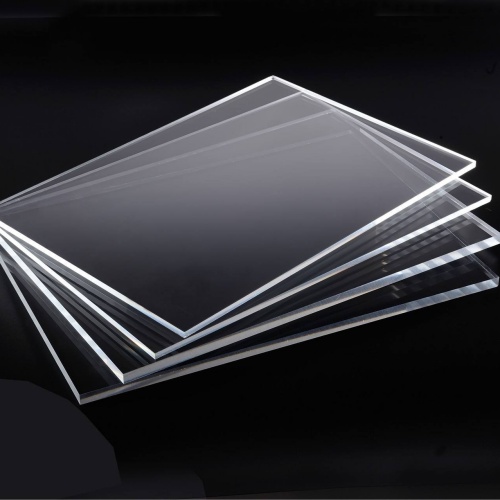
Acrylic sheet thickness standards provide manufacturers and users with
guidelines for selecting material suited to specific optical, structural, and
aesthetic requirements. These standards define common thicknesses, tolerances,
and sizing conventions, facilitating consistency across fabrication processes
and end-use applications. From signage and displays to glazing and aquariums,
choosing the correct thickness ensures both performance and cost-efficiency.
Standard thicknesses for acrylic sheets typically range from 1 mm to 50 mm,
with increments tailored to application needs. Thin sheets (1–3 mm) are favored
for lightweight displays and protective covers, offering good clarity and
formability. Medium thicknesses (4–10 mm) balance rigidity and workability,
making them ideal for furniture surfaces, partitions, and machine guards. Thick
sheets (12 mm and above) provide structural strength for architectural glazing,
noise barriers, and large aquatic exhibits.
Dimensional standards specify sheet widths and lengths, commonly available
in 4 ft × 8 ft (1220 mm × 2440 mm) or metric equivalents, with larger jumbo
sheets produced for industrial use. Tolerance classes define allowable
deviations in thickness, flatness, and parallelism, critical for precision
applications such as laser cutting and CNC machining. Consistent thickness
ensures uniform bonding in laminated assemblies and predictable optical behavior
in lighting fixtures.
Custom sizing options accommodate unique project requirements.
Manufacturers can cut sheets to exact dimensions, thermoform complex curves, or
bond layers to achieve specified total thickness. Edge polishing, drilling, and
CNC routing services allow integration into bespoke designs. Customization
requires careful communication of mechanical loads, thermal expansion, and
environmental exposure to ensure the acrylic will perform reliably over its
service life.
Adherence to acrylic sheet thickness standards and utilization of custom
sizing empower designers and engineers to optimize both form and function. By
aligning material choice with application demands, projects benefit from
enhanced visual clarity, structural assurance, and minimized waste, making
acrylic a versatile choice in modern fabrication.
Previous article:
Clear Polycarbonate Sheets Colored Polycarbonate Sheets PC Sheets Endurance Solid Board
Next article:
How to Polish Acrylic Sheets to a High Gloss